Notes and Goats – 30 October 2026
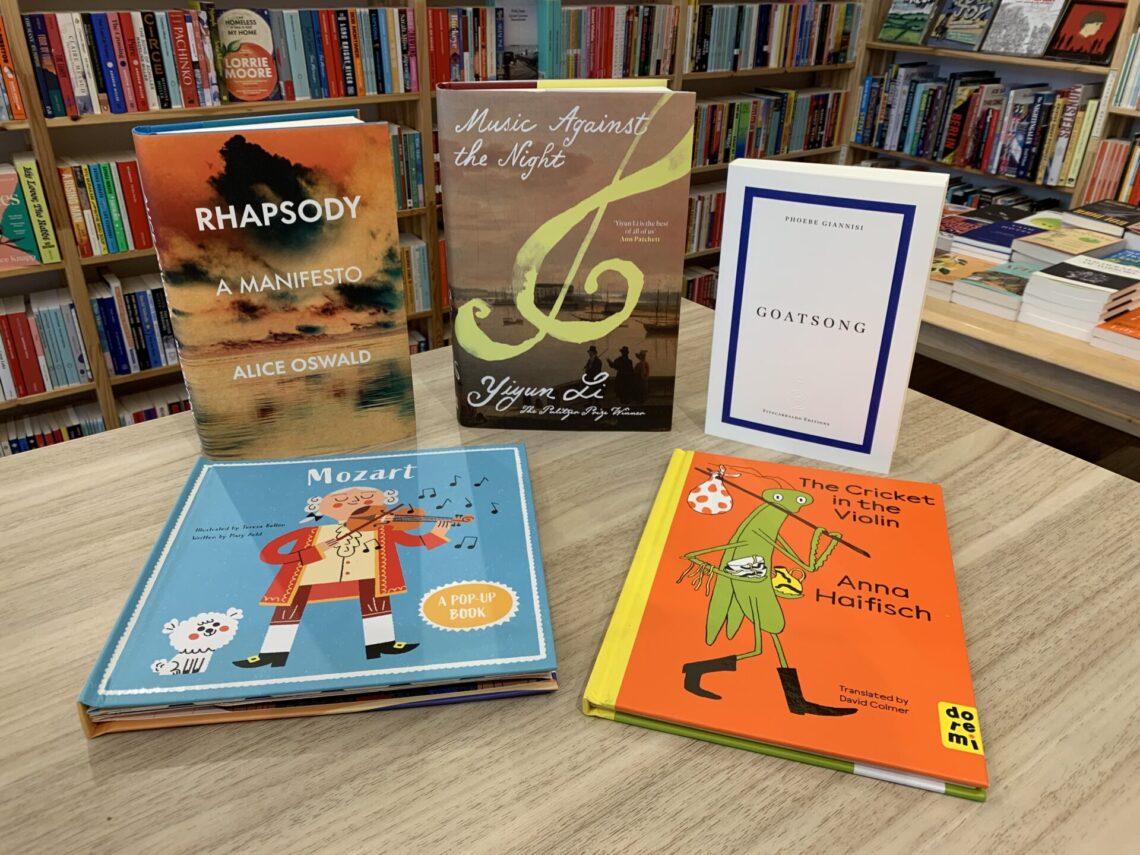
There is a poem of Seamus Heaney’s, ‘September Song’ which names John Field, composer, pianist and inventor (perhaps) of the nocturne.* Field gets a mention in War and Peace and in Tolstoy’s autobiography too. It’s not bad as legacies go, added to his compositions, his teaching method and being ripped off by Chopin. There was someone present to note his final words, a pun leaving an impression of wit not exhibited in life. There were children and those children would go on to have children. Field, with that eye for the Horatian monumentum aere perennius, wanted more; his estranged wife, Adelaide Percheron, did too. To their ghosts and we readers Yiyun Li gives Music Against the Night.
John Field is born in Dublin and raised by his musician father and grandfather to be the next Mozart. Which means that at nine years old he is already fearful of being too late for success. Adelaide Percheron, known as Percherette, is born in Pondicherry, French India, orphaned and raised to be whatever a girl in such circumstances can make of herself. Music, all its beauty, legacy and ambition, is thrust upon Field. Music is sought out by Percherette.
The novel begins with the separate ends of these characters, sails back to the beginning and across the world and shows the ambition and longing of a prodigy and a protégée. We know that they will meet, will have met and will part but that is not quite the story here. Time is an odd and captivating thing in a novel and with Yiyun Li’s skill it is simultaneously controlled and slippery. Pivotal moments for the separate couple happen years but only paragraphs apart. Long sections stretch forward in brackets telling the reader what the characters cannot yet know or will be too late to understand. A moment of genius in composition extends for as long as one note can be felt. Time is a fascinating thing for children, for young virtuosos especially, old before their time whilst their youth is stressed and a history of precocious ability invented. Time is a structured, certain thing in music and yet music, the music pursued by Field and Percherette, can transcend time, channel the past, hold out a future and make the present immortal.
The characters feel recognisable. They are self-interested, adrift and afraid of ageing. They try and they err. They fall in love and shy away from it. Field drinks. Percherette feeds on people. Music may come above everything but musicians need to make a living and the commercialisation of music is scrutinised brilliantly, amusingly, indignantly.
There is much more besides: patterns hinted at, played out, relitigated; preludes and codas juxtaposed; cadences unresolved. Whilst characters, once actual, still real, search to express something new and leave their mark, I thought of being among their audience. ‘Words are like music notes, wounding some people and yet leaving barely a scratch on others,’ Yiyun Li writes, asking, I felt, how engaged a reader one is, how engaged a listener, how affected an individual might be by novel or nocturne.
Similar is asked by Alice Oswald in Rhapsody: A Manifesto which is nothing less than a quest for Poetry Itself, for Homer, for Anon, for that original poet, the nightingale. Rhapsody is challenging (to read and to describe) but gives a great deal too and so one wants to spend time with it.
Oswald does not so much write about Homer and poetry and rhapsody as seek an encounter with them. Rhapsody is an essay or series of essays probing poetry from Gilgamesh to The Odyssey to Shakespeare’s Sonnets to roadside rhapsodes to a violinist collaborating with a bird. It is an essay grappling with the war and pain besetting mankind now and for millennia. It is an essay about simile. It is like realising one is in Plato’s cave, being led towards the outside and glimpsing the light.
Along the way she offers a lost Aeschylus play and from it a lost Homeric epic. So, no big deal. How? Well, you will have to read it. By ‘read it’ I suggest not only that but tune into its vibrating, disorientating noise. Take it for a walk along a river looking for foxgloves, listen to birdsong, sleep outside, high up, under a shining Venus…**
Whether you are reading in- or outdoors, the perfect complement to Rhapsody is Goatsong by Phoebe Giannisi, a poetry collection which also feels like an encounter with Homer, with Greek tragedy, with war and pain and rivers. The title is a translation of the Greek word for tragedy, τραγωδία being a compound of ‘goat’ and ‘song’ but there are also actual goats.
Reading the three-part collection/story feels like a musical experience, sometimes harmonious, sometimes discordant as it is, resounding with everything from insect to human voices, past and present.
Goatsong is something to be experienced aloud too and we are very much looking forward to supporting an event with the poet and her translator, Brian Sneeden, on 19 November.
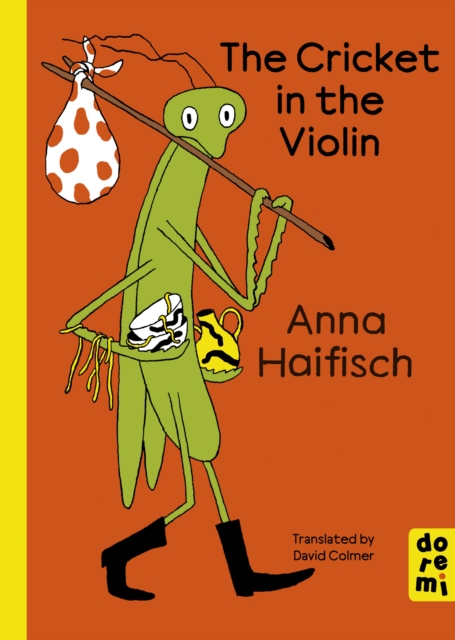
For Oswald and Giannisi, there is music in crickets. For Anna Haifisch there is The Cricket in the Violin. When a cricket comes across a violin in a forest, she thinks it wonderfully practical to move into a house which can also play music. Other animals enjoy her songs too but then winter comes and the wooden instrument looks like it may have more immediate uses. This is a stunning picture book about the permanence of music, the transience of the seasons and/or about a cricket in wellington boots.
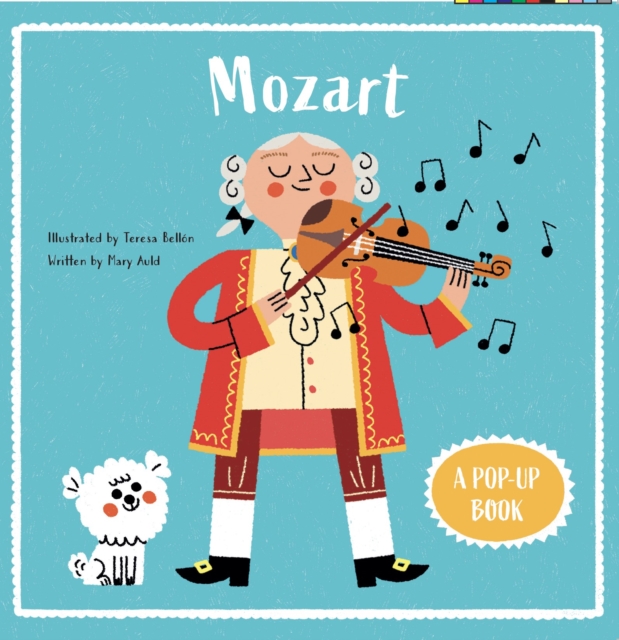
Meanwhile prodigies, virtuosos or those who love wigs will thoroughly enjoy Mozart: A Pop-Up Book by Mary Auld, illustrated by Teresa Bellon, a lively and colourful way of telling his story with stunning theatrical scenes springing out on every page. The young Amadeus and his sister playing a duet at a lavishly decorated harpsichord is gorgeous. There is so much detail and lots to learn, if one isn’t too distracted by how massive Salieri’s ears are…
With Mozart, crickets, poetry and piano resounding, as Heaney advises,
we might as well put on our old record
of John Field’s Nocturnes –
his gifts, waste, solitude, reputation, laughter,
all ‘Dead in Moscow’,
‘Great poets do not die,’ Virginia Woolf announced in A Room of One’s Own, ‘they are continuing presences; they need only the opportunity to walk among us in the flesh.’
Lizzie
*Yes, it’s in Field Work. Nobel Prize Winners succumb to puns too.
**Heron Books is not responsible for any actions you may take inspired by Alice Oswald in pursuit of rhapsody. The ideas are seductive; the reality sounds really cold.
Featured in the newsletter
-

The Cricket in the Violin
£13.99 -

Music Against the Night
£20.00 -

Rhapsody
£20.00 -

Goatsong
£14.99 -

MOZART : A Pop-Up Book
£12.99